
Upstate South Carolina
209-360-9406
ROI INNOVATIONS
ROI Innovations helps local service businesses in Upstate South Carolina show up on Google, get a simple website that works, and organize your business systems so jobs, customers, and finances stop slipping through the cracks.
Are you the Chief EVERYTHING Officer?
With new and intelligent systems your business
won't depend on you for every decision.
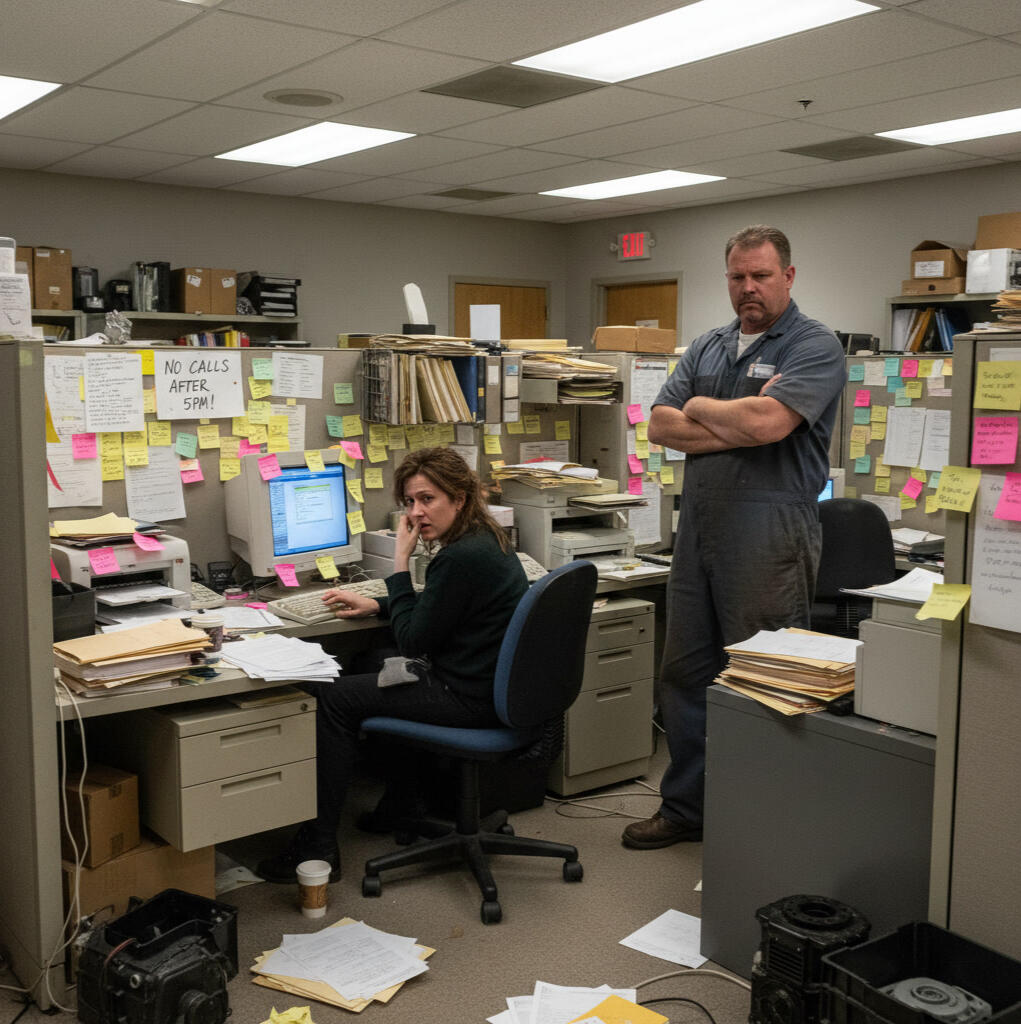
We work with you to find solutions to what's stressing you out
Find Out If What I Do Is Right For You.
Let Us Help
How does less paperwork and more customers sound?
Get More Customers
Predictable lead flow built around how homeowners actually search and choose local service companies in Upstate South Carolina.We help you with:
Clear messaging.
Better follow-up.
Stronger conversion.Not random spikes.
Not panic marketing.
Show Up in Searches
If you don’t appear when someone searches “HVAC repair in Pendleton, South Carolina” or “plumber near me,” you’re invisible.We help you:
• Get found on Google
• Show up on Google Maps
• Get A Free WebsiteYour online presence is how customers find and choose you.
Smart, Practical Processes
Growth without systems creates burnout. We create systems that get you working smarter, not harder.We help you:
• Improve scheduling structure
• Reduce Owner Bottlenecks
• Reduce Time Wasters
• Have More Free Time
Track Money
Not knowing where your money is coming from and where it's going is the fastest way to go out of business.
We help you:
• Track estimates properly
• Automate Invoicing
• Automate Payment Processing
Find Out If What I Do Is Right For You.
How It Works
1. Quick Conversation
We start with a free 20-minute consult to understand your current set up and your priorities.
2. Simple Setup
We work with you to solve the issues that are stressing you out.
3. Systems Support
Everything is explained in plain english so you understand what we’re building and why.
Once everything is in place, I stick around until you're good at it.
4. Ongoing Support
There are options available for continued support too!
Key Statistics & Research Supporting a Website Over Relying Solely on Facebook
1. Many Small Businesses Still Don’t Have a Website• According to Zippia and other sources, 27% of small businesses in 2025 do not have a website. • A Clutch survey found that 36% of small businesses have no website, and 21% use only social media (like Facebook) instead of having a site. • Many cite cost (26%) and perceived irrelevance (27%) as the main reasons for not building a site. 
→ Implication: There’s a real gap where businesses are exposed and vulnerable by skipping a website.
2. Consumer Behavior: People Research Before Engaging• Zippia reports that 81% of shoppers research a business online before making a purchase. • According to Expert Market, 38% of small business owners say they built a website to “appear credible / trustworthy.” • 99% of consumers use the internet to find local businesses, making web presence very important. → Implication: Without a website, businesses risk missing out on potential customers who expect a professional web presence when researching.
3. Risk of Relying Only on Social Media (Like Facebook)• Clutch warns: putting all your online presence “in someone else’s basket” is risky because algorithm changes (like Facebook reducing business reach) can severely limit your visibility. • According to a Small Business Majority report, 41% of small business owners say they don’t know how to create or maintain a website, and 48% say lack of time/resources is a barrier. → Implication: Social media is not stable “real estate” — you don’t fully control it, and you can be penalized by algorithm shifts.
4. Why Small Businesses Do Use Websites• According to Expert Market, many small businesses (41%) build websites to increase visibility, and 33% to drive sales/conversions. • According to Kobe Digital, 30% of small businesses use their website specifically to generate revenue. → Implication: A website is not just for “looking pretty” — it’s a critical tool for business growth, sales, and lead generation.
5. Digital Transformation Barriers• In a Small Business Majority report, 36% of business owners said cost is prohibitive, and a similar percentage said they don’t know how to run a website. • Social media is widely used: 70% of small business owners report using Facebook for their business. **The barriers are real, but they’re not insurmountable
and many simply default to Facebook because it feels “free.”
Do Small Businesses REALLY Need A Website?
Why Small Businesses in Upstate South Carolina Need More Than Just Facebook Marketing
Many small businesses across Upstate South Carolina rely almost entirely on Facebook to promote their services. In places like Greenville, Spartanburg, Anderson, Greer, and Easley, it is common to see businesses with an active Facebook page but no website at all.Facebook is easy to use and free, which makes it appealing. A business owner can post photos, share updates, and respond to customer messages quickly. For staying in touch with existing customers or local community groups, it can work well.The problem is that Facebook alone limits how people discover a business online, especially when they are searching on Google for a service.When someone needs a service today, they usually start with a Google search. They type in something simple like “roof repair Spartanburg,” “pressure washing Greenville,” or “landscaping Anderson.” Google then shows local businesses that match the search. Businesses with websites tend to appear more often and more prominently than those without them.A Facebook page does not give Google much information to work with. A website does. A website can clearly describe services, list service areas, show photos of previous work, and provide structured information that search engines use to match businesses with local searches. Without that information, it becomes harder for potential customers to find the business in the first place.Another issue with relying only on Facebook is control. Facebook decides who sees posts and how often they appear. Algorithm changes can reduce visibility overnight. Pages can also be restricted, hacked, or even removed. When a business depends completely on a social media platform, it is essentially building its online presence on property it does not own.A website is different. It belongs to the business. It becomes a stable place online where customers can always find accurate information.There is also the issue of how long content lasts. A Facebook post may get attention for a few hours or maybe a day. After that it quickly disappears beneath newer posts. A website page, on the other hand, can remain visible in Google search results for months or even years. Instead of fading away, it continues bringing visitors to the business over time.Some business owners assume that building a website is expensive or complicated. That used to be true in many cases, but today there are simpler options. Google Sites allows a business to create a clean, functional website at no cost. For many local service businesses, a simple site that clearly explains what they do and how to contact them is enough to make a meaningful difference online.A Google Sites website also connects naturally with other Google tools. When it is tied to a properly optimized Google Business Profile, it strengthens the overall presence of the business in local search results. This helps customers find the business through Google Maps and regular search results.There is also a trust factor. When people search for a company and see a real website with service information, photos, and contact details, the business immediately appears more established. Even a simple website can make a company look more legitimate than competitors who only have a social media page.A website also saves time. Many customers ask the same questions before hiring someone. They want to know what services are offered, what areas are covered, and how to get in touch. When that information is clearly available on a website, customers can find the answers on their own instead of sending messages or making calls just to ask basic questions.Over time, a website becomes one of the most valuable marketing tools a small business can have. Unlike ads or social media posts that disappear quickly, a website continues working around the clock. It can bring in new visitors, answer customer questions, and help people discover the business through search.The cost of maintaining a simple website is usually small compared to the potential return. For many service businesses, a single new job can be worth hundreds or even thousands of dollars. If a website brings in even one additional customer each month, it can easily pay for itself many times over.None of this means businesses should abandon social media. Facebook can still be useful for sharing updates, posting photos of completed work, and staying connected with customers. The key is understanding that social media works best as a support tool, not the foundation of a business’s online presence.The strongest setup for a small local business is a combination of three things: a well-maintained Google Business Profile, a simple but informative website, and social media for engagement and updates. When those pieces work together, it's easier for customers to find and trust the business.Many small businesses in Upstate South Carolina have built great reputations through hard work and word of mouth. Adding a website simply allows more people to find them when they are actively searching for the services they provide. Even a basic site, when set up properly and kept up to date, can become a powerful long-term asset for the business.
GLOSSARY
A/B Testing
Testing two versions of something (an email, headline, ad) to see which performs better. You change one variable. The winner stays. It’s controlled experimentation, not guessing.Attribution
Figuring out what actually caused a sale. Did they click an ad? Read a blog? Get a referral? Attribution is your attempt to assign credit. It’s messy, but better than pretending everything works equally.Brand
Not your logo. Brand is what people believe about you when you’re not in the room. It’s reputation plus emotional memory.Brand Positioning
The space you claim in the customer’s mind. Cheap? Premium? Fastest? Safest? If you don’t define it, the market will.Call to Action (CTA)
The specific instruction you give someone. “Book now.” “Download the guide.” “Schedule a consult.” If you don’t tell people what to do, they won’t do anything.Churn Rate
The percentage of customers who leave over a given period. High churn means you have a retention problem, not just a marketing problem.Conversion Rate
The percentage of people who take the action you want. 100 visitors, 5 buyers = 5% conversion rate. It’s the truth serum of your marketing.Customer Journey
The path someone takes from not knowing you exist to becoming a customer. Awareness → consideration → decision. Marketing influences each stage differently.Customer Lifetime Value (CLV or LTV)
How much revenue one customer generates over the entire relationship. If you don’t know this number, you don’t know how much you can afford to spend to acquire them.Demand Generation
Creating interest where none existed before. This is long-term brand building, education, content, thought leadership.Direct Response Marketing
Marketing designed to get an immediate action. Click. Call. Buy. It’s measurable and performance-driven.Engagement
Any interaction: likes, comments, shares, clicks. It signals interest, but engagement alone does not equal revenue.Funnel
A simplified model of how many people move from awareness to purchase. Wide at the top, narrow at the bottom. Reality is messier, but funnels help you see leaks.Generative Engine Optimization (GEO)
Optimizing content so AI systems cite and synthesize your brand in answers. It focuses on structured authority and clarity rather than just keyword ranking.Impressions
The number of times your content or ad is displayed. It does not mean people paid attention.Inbound Marketing
Attracting customers through useful content instead of chasing them with ads. You earn attention rather than rent it.Lead
A potential customer who has shown interest, usually by giving contact information.Lead Magnet
Something valuable you give away in exchange for contact info. A guide, checklist, webinar. It’s a trade.Market Segmentation
Dividing your audience into groups based on shared characteristics (location, income, behavior). Marketing to everyone is marketing to no one.Messaging
The specific language you use to communicate value. Clear messaging beats clever messaging.Organic Traffic
Visitors who find you naturally through search engines or unpaid channels. Slow to build, powerful over time.Outbound Marketing
Proactively reaching out to potential customers (cold emails, ads, direct mail). It interrupts rather than attracts.Positioning Statement
A clear summary of who you serve, what you do, and why you’re different. If it’s vague, it’s useless.Return on Investment (ROI)
Profit generated compared to the money spent. If you spend $1,000 and earn $3,000, your ROI is positive. Marketing without ROI tracking is theater.Search Engine Optimization (SEO)
Optimizing content to rank in search engines like Google. Traditionally keyword-focused; increasingly authority-focused.Social Proof
Evidence that others trust you. Reviews, testimonials, case studies. Humans are tribal. We look to others before deciding.Target Audience
The specific group of people you intend to serve. Precision here determines everything else.Top of Funnel (TOFU)
Early-stage content for people who are just becoming aware of a problem.Bottom of Funnel (BOFU)
Content aimed at people ready to make a decision. Case studies, pricing, demos.Value Proposition
The clear reason someone should choose you over alternatives. If it’s generic, it’s not a value proposition.
Our Services
Helping Home Service Businesses In Upstate South Carolina That Want More Calls And Less Paperwork
When someone searches for a service near them, most of the time they are using Google Maps or the local search results.The service that costs the least also can give you the biggest win and quickly. That service is the Google Business Profile Optimization.A strong Google Business Profile is just one piece of a bigger system. When combined with a clear website that explains your services, CRM and customer tracking systems, accurate bookkeeping, and upkeep and staff training, it creates a complete local visibility ecosystem.We take a complete, practical approach to getting your business found locally and that leads from searches are captured, tracked, and converted into customers. Every step is focused on results that are easy to understand and implement.
Google Business Profile Optimization
When someone searches for a service near them, most of the time they are using Google Maps or the local search results.
What we can do:
• Claim or create your listing and verify with Google
• Update Offerings or Specials
• Current Hours of Operations & Holiday or Emergency Hours
• Choose the right categories and services to match customer searches
• Upload high-quality photos, updates, and offers
• Create Special Announcements
Local Search Setup
Local search setup increases your chances of appearing in the map pack and local search results.
What we can do:
• Improve visibility for “near me” searches
• Build consistent citations across directories
• Optimize keywords for your city and service type
• Monitor search performance and rankings
Reputation & Review Systems
Reviews influence both customer decisions and local search rankings. Build trust and attract customers by actively managing your online reputation.
What we can do:
• Guide your customers to leave positive reviews
• Respond to reviews to build trust and credibility
• Track review platforms to ensure your reputation stays strong
Data Accuracy & Consistency
Inconsistent data confuses search engines and customers.
What we can do:
• Ensure your business information matches across Google, Yelp, and other directories
• Update service offerings and hours whenever they change
• Remove duplicate or outdated listings
Website Setup & Digital Presence
Your website should attract customers, explain services, and guide visitors to take action. We make it simple, clear, and Informative enough that it saves you time.
What we can do:
• Simple Website Setup or Google Site Setup
• Persuasive Website Copywriting
• Basic Analytics & Tracking Tools
• SEO
• Hosting and Domain Setup
Business Systems & Automation
Organized systems manage information so you can make decisions calmly. Stop losing time and data. Keep customers, leads, work orders, invoices, and more, organized with systems or processes that work.
What we can do:
• Simple CRM Setup
• Customer Tracking & Follow-Up Systems
• Process Digitization
• Simple Analytics & Decision Tools
• QuickBooks Setup and so miuch more...
Support, Training & Maintenance
Systems work best when they are maintained and staff know how to use them.Even the best tools fail without proper training and ongoing attention.
What we can do: